
💡What You'll Learn
- How AI is changing workplace productivity
- Why human judgment matters in AI
- The role of creativity and critical thinking
- How businesses can adopt AI effectively
- Why originality is the new advantage
AI Is Making Average Work Look Brilliant, And That's a Problem
When everyone has access to the same AI, looking good becomes easier. Thinking differently becomes the real advantage.
Generative AI is making polished work faster and easier to produce, from emails and presentations to software and marketing content. Research increasingly shows that AI can improve productivity and help less experienced workers perform tasks more effectively, but that also raises the baseline for what counts as acceptable work. When everyone can produce something that looks professional, execution alone becomes less distinctive and human judgement, originality, critical thinking and knowing what is worth creating become more valuable. For businesses in Sydney, Melbourne, Brisbane and Perth, the competitive question is no longer simply how quickly teams can use AI, but whether they can use it to produce work that is genuinely useful, differentiated and worth remembering.
AI Has Changed What "Good" Looks Like
I noticed something strange recently.
A piece of work came across my screen. The writing was clean, the structure was polished and the conclusion sounded convincing.
At first glance, it looked excellent.
Then I asked one question:
"What does this actually say that everyone else hasn't already said?"
The answer was uncomfortable.
Almost nothing.
It wasn't bad work.
It was average work with an excellent finish.
And generative AI is making this increasingly possible.
AI Is Raising the Floor
Before generative AI became part of everyday work, producing polished content often required significant time.
You had to research, write, rewrite, edit, structure and proofread.
Now, an AI tool can turn a rough idea into something that looks finished within seconds.
That is genuinely useful. Research from the OECD on generative AI and productivity found that AI can improve performance on tasks such as writing, summarising, editing and coding, with some experiments showing substantial productivity gains.
But there is a catch.
When everyone has access to similar tools, the tools themselves become less of a competitive advantage.
If everyone can generate a professional email, who writes the memorable one?
If everyone can create a presentation, who tells the better story?
If everyone can produce an article, who actually has something worth saying?
The floor has moved up.
And when everyone's floor gets higher, standing out gets harder.

The Problem Isn't That AI Produces Bad Work
It's that AI can produce convincing work.
Bad work is usually easy to identify.
You can reject it.
Average work disguised as excellent work is much harder.
AI can give weak ideas better grammar. It can turn vague thinking into confident paragraphs and make a generic strategy sound sophisticated.
It can transform a basic presentation into something visually impressive.
But there is one thing it cannot automatically give you:
A reason to care.
That is still your job.
The New Skill Is Knowing What Not to Generate
We've spent a lot of time learning how to use AI.
Prompt engineering.
AI tools.
Automation.
AI agents.
Workflows.
But another skill is becoming just as important:
Knowing when AI should not be doing the thinking.
If you ask AI to generate ten ideas and choose the safest one, you will probably get something polished.
If you ask it to challenge your assumptions, identify contradictions and show you what you are missing, the result can be much more useful.
The difference is not simply the tool.
It is the judgement behind the tool.
Microsoft's 2026 Work Trend Index found that AI users increasingly identify quality control and critical thinking as important human skills as AI takes on more work.
That is the shift.
AI can generate.
Humans still have to decide what deserves to remain.
Think About LinkedIn for a Second
We've all seen it.
The perfectly formatted post.
Three short paragraphs.
A dramatic opening.
A lesson.
A motivational ending.
Five hashtags.
It looks familiar because we've seen hundreds of them.
AI has made producing this type of content incredibly easy.
But there is a problem.
When everyone sounds polished, polish stops sounding human.
People do not necessarily remember the perfectly structured post.
They remember the uncomfortable opinion.
The strange experience.
The failure.
The lesson nobody expected.
The story that feels like someone actually lived it.
For a business competing for attention in Sydney or Melbourne, this matters because professional content is no longer competing only with poorly written content.
It is competing with an internet full of AI assisted content that already looks polished.
AI Can Copy Patterns
It Cannot Automatically Give You a Point of View
AI is extremely good at recognising patterns.
It can identify how successful content is structured. It can summarise arguments, generate alternatives and reproduce familiar formats.
But your advantage is not simply having access to information.
Everyone has access to information.
Your advantage is what you notice.
What you have experienced.
What you disagree with.
What you learned the hard way.
What you believe that is not obvious.
That is where originality comes from.
The OECD's research on generative AI and productivity similarly highlights the importance of human AI collaboration and notes that AI's effectiveness depends on the user's experience and the task being performed.
AI can help you explore an idea.
It cannot automatically make the idea yours.

The Best AI Users Won't Look Like AI Users
This sounds strange.
But think about it.
The best photographers do not spend their time talking about their cameras.
The best designers do not spend every conversation explaining their software.
And the best AI users will not necessarily be the people who use the most AI.
They will be the people who know exactly where AI adds leverage and where human judgement matters more.
Microsoft's 2026 research describes a similar shift towards human agent collaboration, where AI takes on more execution while people increasingly direct work, make decisions and remain responsible for outcomes.
AI should make your thinking more powerful.
It should not make your thinking unnecessary.
We're Entering the Age of the "AI Native" Average
This is where things get uncomfortable.
Imagine a workplace where everyone has access to AI writing assistants, research tools, coding assistants, presentation generators, design tools, meeting summaries and data analysis.
Everyone becomes faster.
Everyone becomes more productive.
Everyone produces more.
But if everyone improves by roughly the same amount, the competitive advantage becomes harder to maintain.
We could end up with a strange new workplace where everyone is highly efficient at producing work that nobody remembers.
That is the problem.
The OECD's research on SMEs shows why this matters. Its 2025 survey found that 31% of surveyed SMEs across seven countries were already using generative AI, with many reporting improved employee performance and greater ability to address skill gaps.
AI is making capable execution more accessible.
That makes distinctive thinking more important, not less.
So What Actually Becomes Valuable?
If AI makes execution cheaper, something else becomes more valuable.
Judgement.
Knowing which problem is worth solving.
Knowing which idea deserves investment.
Knowing when data is misleading.
Knowing when an AI response sounds confident but does not make sense.
Knowing what customers actually need.
Knowing what to remove.
Knowing when to say no.
These are not simply productivity skills.
They are thinking skills.
And they become more important as AI handles more execution.
The International Labour Organization also finds that AI is more likely to augment human capabilities in many roles than simply automate entire occupations, reinforcing the importance of understanding how tasks and human capabilities interact with AI.
The People Who Stand Out Will Ask Better Questions
We've spent years telling people to learn AI.
Maybe the next lesson should be different.
Learn your industry.
Understand your customers.
Develop taste.
Build judgement.
Study human behaviour.
Read outside your field.
Have opinions.
Challenge assumptions.
Then use AI.
Because AI can help you move faster.
But it cannot decide where you should be going.
For Australian businesses, that distinction is becoming increasingly relevant. Australia's Department of Industry, Science and Resources now provides guidance aimed at helping businesses adopt AI in practical and responsible ways.
The technology is becoming easier to access.
The harder question is what you do with it.
The Future Belongs to People With Taste
When everyone can generate ten designs, choosing the right one becomes more important.
When everyone can generate an article, having something meaningful to say becomes more important.
When everyone can build an MVP, understanding the customer becomes more important.
When everyone can analyse data, knowing which question to ask becomes more important.
AI is reducing the cost of creation.
And that means taste, judgement and originality become more valuable.
A business in Brisbane can use AI to generate dozens of marketing concepts.
But AI does not automatically know which one actually fits the brand.
A company in Perth can automate reports.
But someone still needs to understand what the numbers mean.
The tool creates options.
Human judgement creates direction.
We Don't Need Less AI
We Need Better Humans Behind It
The answer is not to stop using AI.
That would miss the point.
AI is one of the most powerful productivity technologies available to businesses, and research suggests it can improve performance when applied appropriately. The OECD's research on generative AI describes it as having the potential to become a general purpose technology, while noting that its productivity effects depend on how it is implemented.
The opportunity is enormous.
But we need to stop confusing output with insight.
A 2,000 word article is not necessarily valuable because it has 2,000 words.
A beautiful presentation is not necessarily persuasive.
A working piece of software is not necessarily useful.
More output does not automatically mean more value.
Sometimes it just means more noise.
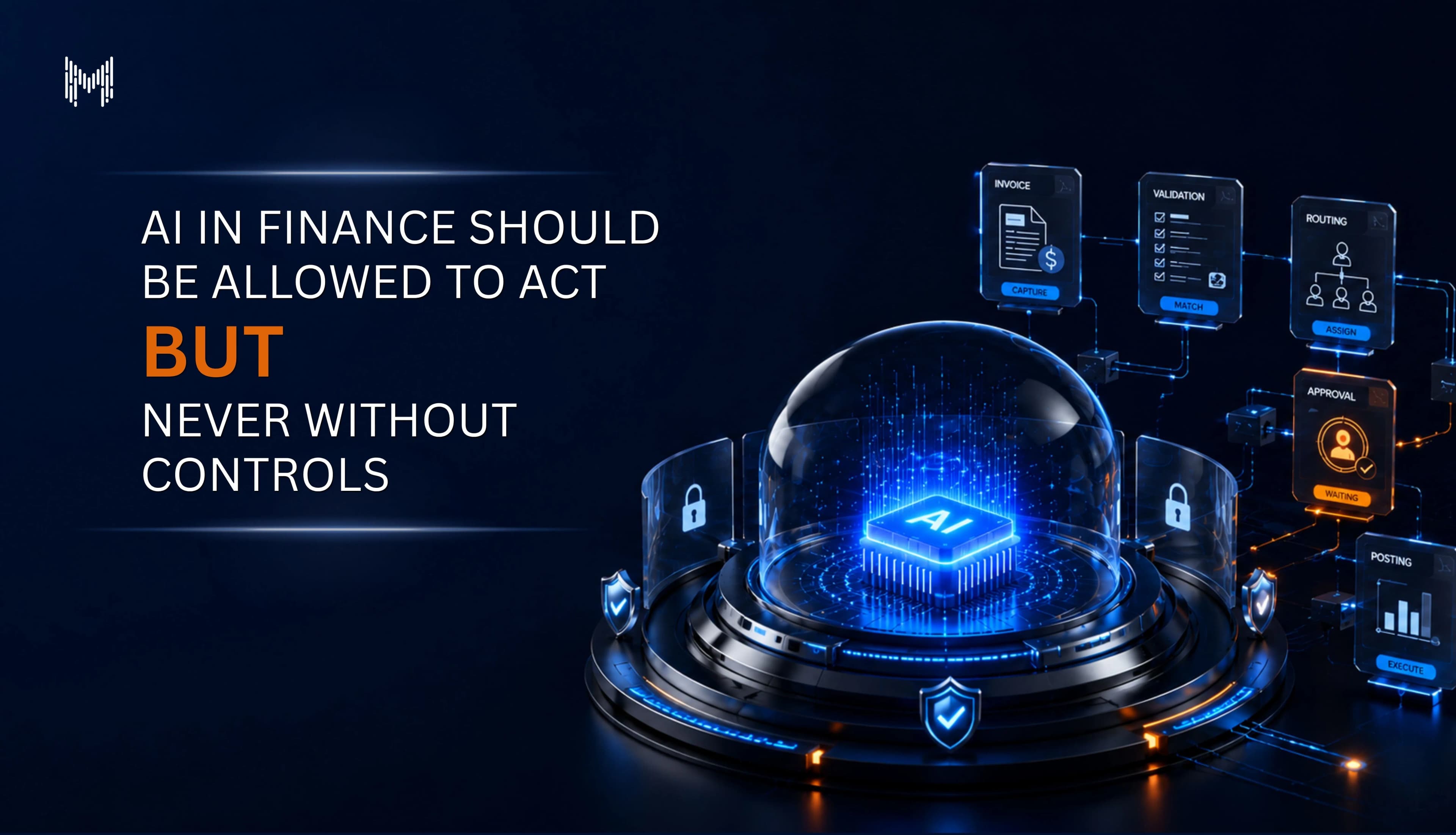
AI Needs Guardrails Too
There is another side to this conversation.
The more organisations rely on AI, the more important it becomes to understand how AI generated work is reviewed, secured and governed.
An AI system can produce an answer quickly, but speed does not guarantee accuracy.
It can generate code, but generated code still needs testing.
It can analyse information, but the quality of its output depends partly on the information and context it receives.
The NIST AI Risk Management Framework provides organisations with a structured approach for managing AI risks and incorporating trustworthiness into the design, development, use and evaluation of AI systems.
For a business in Sydney, Melbourne, Brisbane or Perth, responsible AI adoption therefore needs to include more than choosing an AI tool.
It needs clear ownership, appropriate review and an understanding of where human oversight remains necessary.
The New Definition of "Good"
For years, good work meant:
Accurate + polished + complete.
AI is making all three easier.
So the definition has to evolve.
Good work increasingly means:
Useful + original + thoughtful + relevant.
Those qualities are much harder to automate.
And that may be the most important change AI brings to knowledge work.
When execution becomes easier, judgement becomes more visible.
When production becomes cheaper, originality becomes more valuable.
When everyone can make something, knowing what deserves to exist becomes the real skill.
What This Means for Australian Businesses
Australia is already moving towards broader AI adoption.
The Australian Bureau of Statistics reported that 12% of Australian businesses used AI in 2024-25, up from 1% in 2021-22. The Australian Government's National AI Plan also identifies widespread AI adoption and workforce capability as important parts of building an AI enabled economy.
This means the competitive question for Australian businesses is changing.
It is no longer simply whether your competitors use AI.
They increasingly will.
The more useful question is whether your business can use AI to improve decisions, customer experiences, products and operations without losing the human judgement that makes those improvements valuable.
For businesses across Sydney, Melbourne, Brisbane and Perth, that could mean redesigning workflows around AI while keeping people responsible for the decisions that matter most.
The goal is not maximum AI.
The goal is maximum value from AI.
Why Choose Mkaits for AI Development
At Mkaits Technologies, we approach artificial intelligence as a business capability rather than simply another software feature. Our team works across AI and ML, custom software, automation, data analytics and intelligent applications to help businesses turn AI capabilities into practical solutions.
The objective is not to add AI everywhere. It is to identify where AI can create measurable value while keeping the technology scalable, secure and aligned with real business needs. From AI powered applications to intelligent automation and custom software, Mkaits helps businesses build technology that works for people, not just technology that looks impressive.
Final Thoughts
AI is not destroying quality.
It is changing the competition.
The person who could not write can now write.
The person who could not design can now design.
The person who could not code can now build.
That is extraordinary.
But it also means the ability to produce something is becoming less impressive on its own.
The question is shifting from:
"Can you make it?"
to:
"Was it worth making?"
That is a much harder question.
And perhaps that is exactly what we need.
Because if AI gives everyone the ability to produce more, our competitive advantage will not come from producing more.
It will come from thinking better about what deserves to exist.
AI can make average work look brilliant.
But it still takes a human to make brilliant work matter.